67 counties · Panhandle to the Keys
Crane certification prep for every corner of Florida
Find the county or city you work out of. Each local page looks at the lifting work in that area, such as seaports, launch sites, high-rise construction, power line work, mills, mines and storm rebuilding, plus the soil, wind and water conditions that shape a setup there and the certifications that work usually calls for.
Florida counties & cities
Alachua County
Baker County
Bay County
Bradford County
Brevard County
Broward County
Calhoun County
Charlotte County
Citrus County
Clay County
Collier County
Columbia County
DeSoto County
Dixie County
Duval County
Escambia County
Flagler County
Franklin County
Gadsden County
Gilchrist County
Glades County
Gulf County
Hamilton County
Hardee County
Hendry County
Hernando County
Highlands County
Hillsborough County
Holmes County
Indian River County
Jackson County
Jefferson County
Lafayette County
Lake County
Lee County
Leon County
Levy County
Liberty County
Madison County
Manatee County
Marion County
Martin County
Miami-Dade County
Monroe County
Nassau County
Okaloosa County
Okeechobee County
Orange County
Osceola County
Palm Beach County
Pasco County
Pinellas County
Polk County
Putnam County
Santa Rosa County
Sarasota County
Seminole County
St. Johns County
St. Lucie County
Sumter County
Suwannee County
Taylor County
Union County
Volusia County
Wakulla County
Walton County
Washington County
Nine regions, nine kinds of crane work
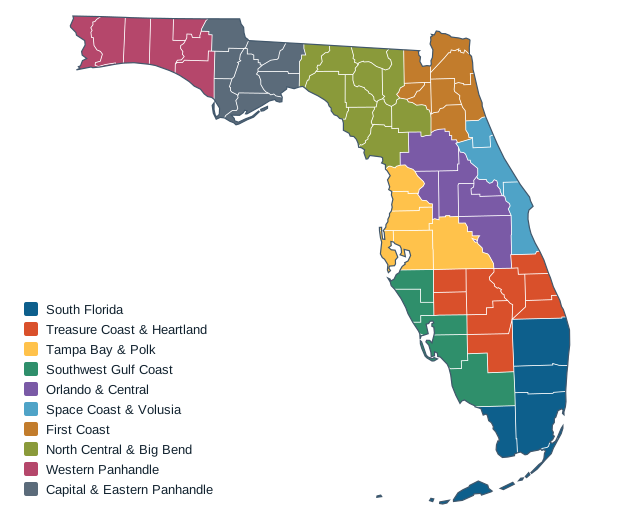
The certification exams are the same in every county, but the work they lead to changes a lot between Pensacola and Key West. Here is a rough map of where the lifting is.
- South Florida: tower cranes on condo and office towers in Miami, Fort Lauderdale and West Palm Beach, container and cruise terminals at PortMiami and Port Everglades, and long hauls for anything going down to the Keys
- Tampa Bay: downtown towers in Tampa and St. Petersburg, bridge and interstate rebuilding, and cargo at Port Tampa Bay
- Orlando and Central Florida: theme park construction, hotel and warehouse growth, and the I-4 corridor
- Space Coast: launch pad, hangar and processing facility work around Cape Canaveral and Kennedy Space Center, plus Port Canaveral
- First Coast: JAXPORT, Navy installations, pulp and paperboard mills in Fernandina Beach and suburban growth from St. Johns to Clay County
- Panhandle: shipyards around Panama City and Pensacola, military bases, and the long rebuild after Hurricane Michael
- Southwest: rebuilding along the Fort Myers, Cape Coral and Naples coast after Hurricane Ian, and steady new housing
- Big Bend and North Central: timber, pulp and utility work in a mostly rural stretch where exam sites are a long drive away
- Heartland: phosphate country, citrus and sugar processing, and Lake Okeechobee levee work, with mining jobs under MSHA rather than OSHA
Conditions that follow you across the state
Most of Florida sits on sand with a shallow water table, and karst geology in the central and northern counties adds sinkhole risk, so outrigger pads, crane mats and ground bearing come up on nearly every job. Salt air speeds corrosion on wire rope and hardware near the coast. Summer brings near-daily thunderstorms and lightning, and from June 1 through November 30 the hurricane season puts wind limits and the new state securing requirements in play for tower cranes, mobile cranes and hoists.
Local pages point out where these matter most, whether that's soft fill on a barrier island or overhead power lines along a rural highway.
Making use of the county and city pages
Start with the county where your jobs usually are, then open the city page if there is one. Each page lists the courses that best fit the work around it and links to neighboring areas, which helps if you cross county lines every week.
Written exams can be taken at a test center, at a test event or through online proctoring, so home address matters less there. Practical exams need a crane and an approved test site, and those tend to be set up around the larger metros or at an employer's yard. An enrollment advisor can talk through how people from your part of Florida usually handle it.
Line up your Florida crane exam prep today
Send a few details: the card you need, the equipment you run and the part of Florida you work in. An enrollment advisor writes back with a matching course and a plan for getting your written and hands-on exams on the calendar.
- Self-paced lessons that open on a phone, tablet or laptop
- Practice questions written in the style of the NCCCO tests
- Pointers on finding a practical test site near your county
Ask about enrollment
A short form. Your details are used only to reply to you.